Supporting your child’s creativity at home — a practical guide for parents
“My child is so creative,” we say proudly when a little one paints something unusual or makes up a surprising story. But creativity is not a talent you are either born with or not. It is a skill that can — and should — be developed. And home is the best place to do it, because that is where a child spends most of their time.
Creativity is not just art
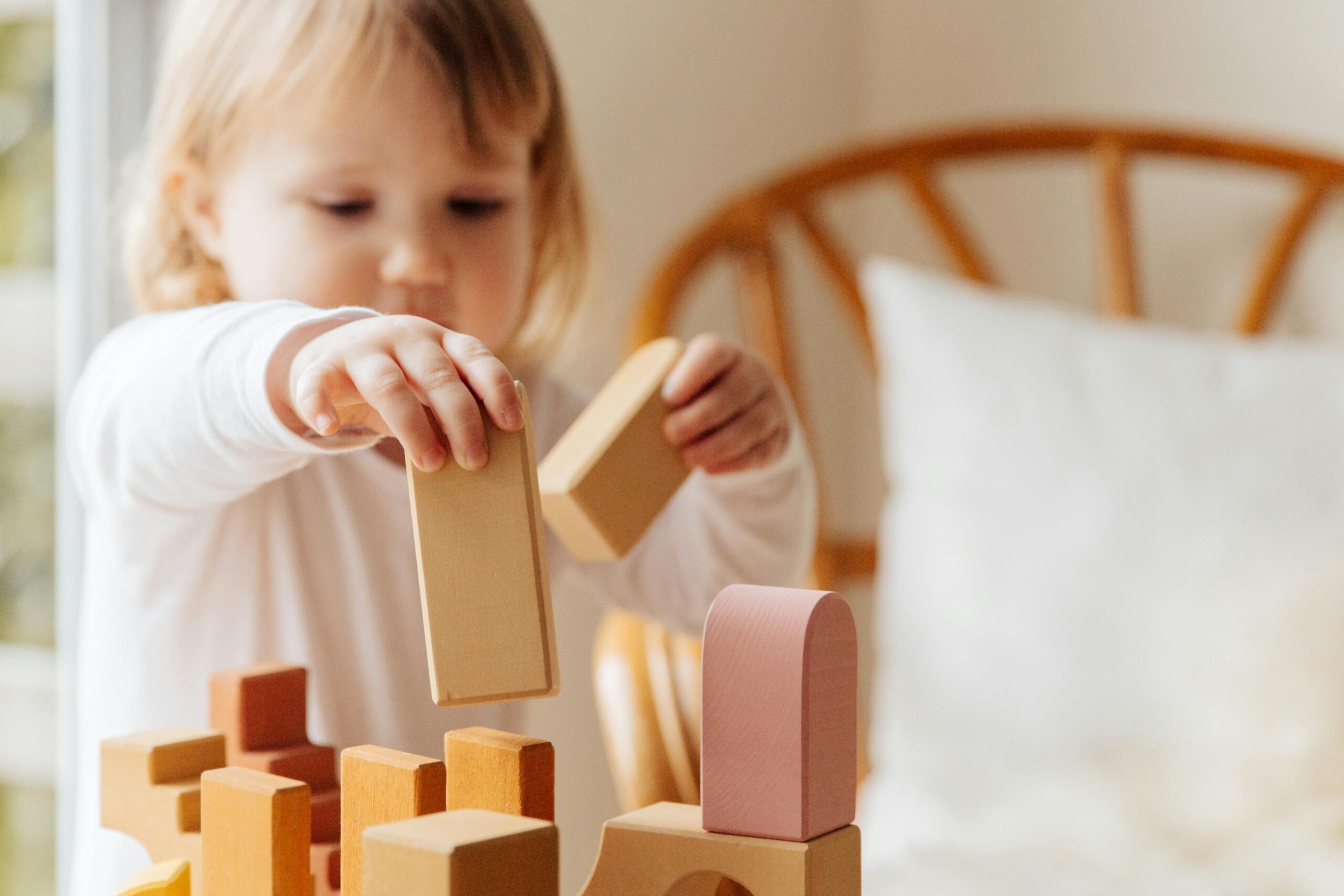
Let’s start with an important distinction. Creativity is not the same as artistic ability. A creative child is not only one who draws beautifully. It is a child who can think outside the box, find unusual solutions and ask unusual questions. Creativity shows in the way a child builds a castle from blocks, invents rules for a new game, tells stories or asks “what would happen if…”. Sir Ken Robinson, whose TED talk on creativity in education has been watched more than 70 million times, warned that traditional schooling systematically stifles children’s creativity instead of developing it.
In the Reggio Emilia approach, creativity is seen as a fundamental ability of every child — not just a chosen few. Loris Malaguzzi believed that creativity is a child’s natural way of being in the world. Our role as adults is therefore not to “teach creativity”, but not to get in the way of its natural flourishing — and ideally, to create the conditions in which it can develop.
A space for creating
The first step is to create a place at home (a kind of home atelier) where your child can create freely. It does not have to be a separate room or a professional studio — a small table, a few shelves and a set of basic materials are enough. What matters is that the child has constant, easy access to them, so they don’t have to ask for permission every time they want to draw or model.
Which materials? Open-ended ones are best — materials without a single “correct” use. Crayons, paints, paper in different sizes, scissors, glue, play dough, clay, beads, string, cardboard and scraps of fabric. Add natural materials: stones, shells, sticks, leaves and feathers. These simple things give a child endless possibilities — far more than the most expensive creative kits from the toy shop. Simon Nicholson’s work on “loose parts” (loose parts theory) supports the idea that the more open-ended materials there are, the richer the play.
Time to be bored
It sounds paradoxical, but one of the most effective ways to develop creativity is to let a child be bored. In our culture boredom is seen as something bad — we react immediately by suggesting an activity, putting on a cartoon or handing over a phone. Yet boredom is a gateway to creativity.
When a child has “nothing to do”, their brain starts working harder: looking for ideas, tinkering and inventing. Boredom gives rise to the most interesting games, the most elaborate block buildings and the longest stories told to teddy bears. Psychologist Teresa Belton of the University of East Anglia interviewed many creative people and found that almost all of them remembered childhood boredom as a source of their later creativity. Give your child space and time — and they will find inspiration on their own.
Ask instead of judging
One of the most common — and most harmful — adult habits is judging a child’s work. “What a beautiful drawing!” we say automatically. The problem is that constant praise teaches a child to create for praise, not for themselves. Worse still, it builds a fear of failure — if it has to be “beautiful”, maybe it is better not to take risks and paint something safe?
Instead of judging, ask. “Tell me about your drawing.” “What’s happening here?” “Which colour did you use and why?” “How do you feel when you look at it?” These questions show your child that you are interested in their thinking process, not the end result. This builds intrinsic motivation — the child creates because they enjoy creating, not because they want praise. Carol Dweck of Stanford University calls this a “growth mindset” — and has shown that it is crucial for success throughout life.
Don’t correct
Another trap is correcting a child’s work. “The sky is blue, not green.” “People don’t have four arms.” “This house is crooked.” Every such comment tells the child: “your way of seeing the world is wrong”. And that is deadly for creativity. In the Reggio Emilia approach we respect the child’s individual creative language. If a four-year-old draws the sky green, perhaps they see the grass reflected in the sky, perhaps they are deliberately experimenting with colour, or perhaps they simply like that green. Each of these reasons is valuable. Our role is not to correct, but to listen.
Create together
The most precious moments happen when parents create together with their children — not “for them” or “instead of them”, but “with them”. Paint a picture together. Build a castle out of cardboard boxes. Make up a story together and illustrate it. Cook together, plant seeds, build a birdhouse.
An important rule: don’t take over. When you build a tower of blocks together, don’t correct the child’s design to match yours. Be an assistant, not a director. Ask: “What next?” “Where should I put this?” Give your child control over the creative process — and watch them flourish. These shared creative moments are among the most valuable gifts you can give your child — more important than any toy or educational app.
Sources and further reading
- Vecchi V., Art and Creativity in Reggio Emilia: Exploring the Role and Potential of Ateliers in Early Childhood Education, Routledge, 2010.
- Lowenfeld V., Brittain W.L., Creative and Mental Growth, Macmillan (8th ed.), 1987.
- Ginsburg K.R., “The Importance of Play in Promoting Healthy Child Development and Maintaining Strong Parent-Child Bonds”, Pediatrics, 2007, 119(1), pp. 182–191.

About the author
Katarzyna Jaszczuk
Methodological Director of Accademia dei Piccoli preschool in Kabaty. She is responsible for the Reggio Emilia-based curriculum, pedagogical documentation and supporting teachers in their daily work with children. Meet our team
Read also: Play is serious business — why free play is key to child development · The atelier — why every preschool should have a creative studio
Would you like to see what this looks like at Accademia dei Piccoli?
You are welcome to visit our preschool in Kabaty (ul. Ekologiczna 4). Book by phone: +48 606 125 126 or by email: kontakt@piccoli.pl. You will find answers to the most common questions in our FAQ.