What is the Reggio Emilia approach and why does it change the way we think about education?
When, in 1945, the people of the small Italian town of Reggio Emilia decided to build a preschool from the bricks left after the destruction of the war, no one imagined that they were laying the foundations of one of the most important educational approaches of the 20th century. Today, more than seventy years later, the Reggio Emilia philosophy inspires teachers and parents all over the world — including us at Accademia dei Piccoli.
Not a method, but a philosophy
It is worth starting with an important distinction. Reggio Emilia is not a method in the traditional sense of the word — there is no handbook of ready-made lesson plans, no checklist of exercises and no rigid programme divided into weeks. It is rather a way of looking at the child and at education: a set of values, beliefs and practices that together form a coherent vision of what early education can be when we take it truly seriously. The approach grew out of a specific place and time, but its universality has led preschools on every continent to adopt it.
Loris Malaguzzi, the founder of this approach, often said that every child is born with unlimited potential. A child is not an empty vessel to be filled with knowledge, but an active builder of their own understanding of the world. This seemingly simple idea has huge practical consequences — it changes the role of the teacher, the way space is organised and the very purpose of education. Instead of asking “what should the child be able to do?”, we start asking “what can this child already do, and where do they want to go?”.
The hundred languages of children
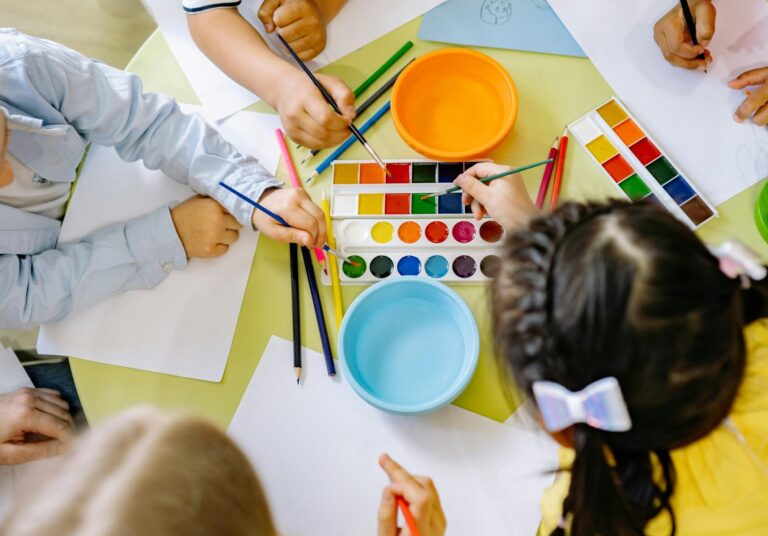
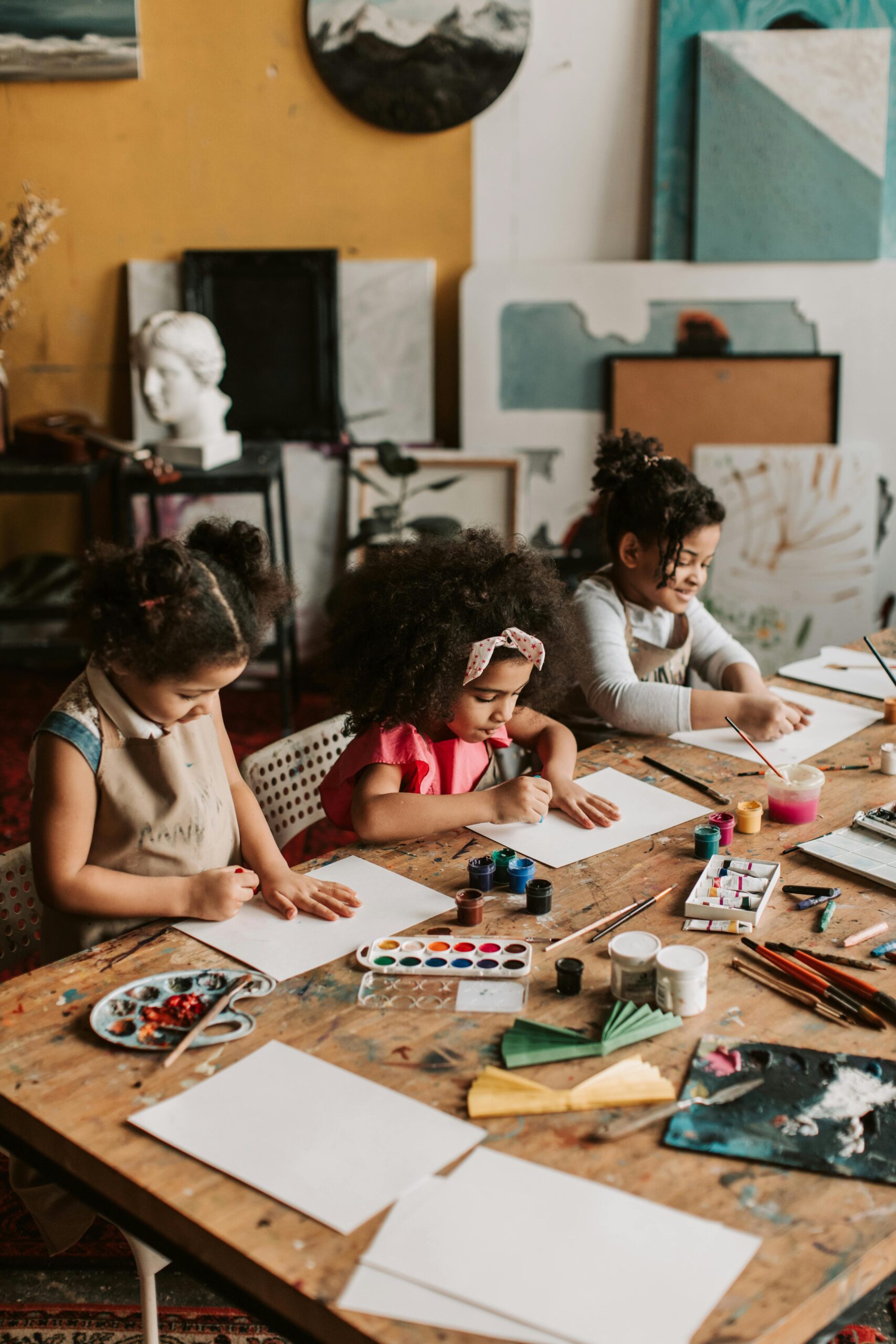
One of the best-known ideas associated with the Reggio Emilia approach is the “hundred languages of children”. In Malaguzzi’s words, “the child has a hundred languages”. The point is that children express themselves and learn in many ways: through speech, but also through drawing, music, movement, dance, building, modelling and drama. Traditional schooling too often reduces these “hundred languages” to just a few — reading, writing and arithmetic. The Reggio approach encourages us to give children space to use all of their languages.
At our preschool this means, for example, that a project about the seasons might start with observing leaves in the garden, move on to painting autumn colours in the atelier, explore music by listening to the sound of the wind, and end with modelling in clay. Each child finds their own way through this process — there is no single “correct” answer. The teacher observes, documents and proposes new experiences that deepen the children’s interests.
The teacher as a companion, not a lecturer
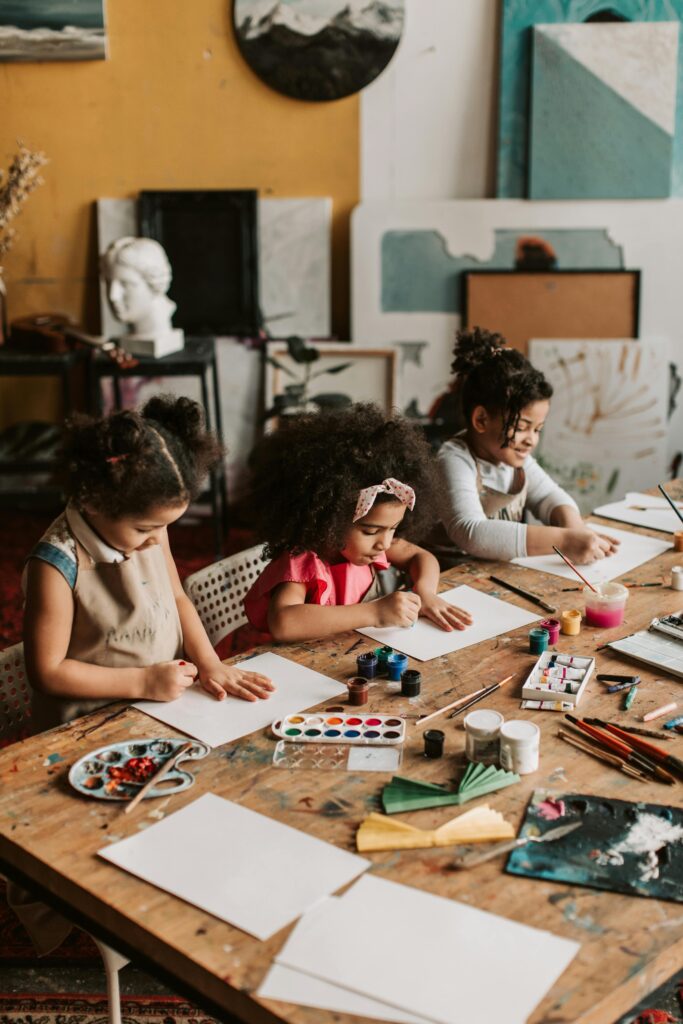
In the traditional model the teacher stands in front of the group and passes on knowledge. In the Reggio Emilia approach the role is completely different: the teacher is an observer, a listener and a co-researcher. They watch the children closely, document their play and conversations and then — based on these observations — propose new experiences that deepen their interests. This requires great sensitivity and humility from the teacher.
Instead of imposing a topic of the week, the teacher has to listen carefully to what the children are living, what intrigues them and what questions they ask. This approach is called “progettazione” — flexible planning that emerges from ongoing observation rather than from a ready-made plan. In practice it looks like this: if the children become fascinated by snails found in the garden, the teacher does not say “today’s topic is colours” — instead they build a whole project around the snails, which may last a day, a week or a month.
The environment as the third teacher
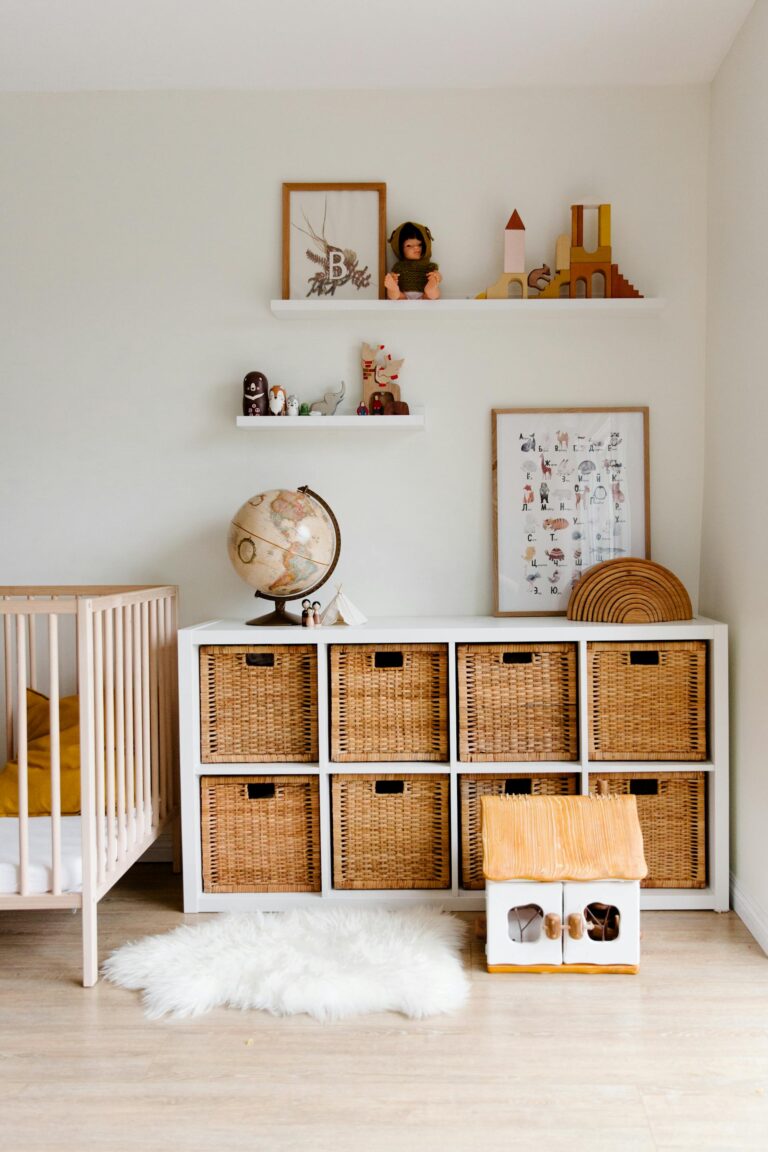
In Reggio Emilia, space is said to be “the third teacher” — alongside adults and peers. That is why so much importance is attached to how the rooms in which children spend their time look and are organised. Aesthetics, natural light, access to materials and the presence of nature — it all matters. At Accademia dei Piccoli we make sure our space is beautiful, orderly and inviting to explore. Materials are within the children’s reach, colours are warm and calm, and in every corner there is something interesting to investigate.
Documentation — the memory of learning
One of the hallmarks of the Reggio approach is pedagogical documentation. Teachers photograph, record and write down the children’s words, collect their work and then turn it all into a story of the learning process. It is not a portfolio in the traditional sense — it is a tool for reflection that helps adults (teachers and parents) better understand how the child thinks, while the children themselves can return to their experiences and see their own development. Documentation is a bridge between preschool and home — it lets parents see what their child is absorbed in throughout the day.
Why is it worth it?
In a world where there is more and more talk about the need for creativity, cooperation and independent thinking, the Reggio Emilia approach proves surprisingly relevant. It does not teach ready-made answers, but how to ask questions. It does not train obedience, but builds self-confidence. It does not measure all children with the same yardstick, but celebrates their individuality. Research on early childhood education around the world consistently confirms that an approach based on respect, autonomy and creative exploration brings the best long-term results.
If you are looking for a place for your child where this philosophy is everyday practice rather than just a slogan in a leaflet — you are welcome at Accademia dei Piccoli. We will be happy to tell you more about our approach during a visit to the preschool.
Sources and further reading
- Edwards C., Gandini L., Forman G. (eds.), The Hundred Languages of Children: The Reggio Emilia Experience in Transformation, 3rd ed., Praeger, 2012.
- Rinaldi C., In Dialogue with Reggio Emilia: Listening, Researching and Learning, Routledge, 2006.
- Reggio Children – official website: Reggio Emilia Approach.

About the author
Katarzyna Jaszczuk
Methodological Director of Accademia dei Piccoli preschool in Kabaty. She is responsible for the Reggio Emilia-based curriculum, pedagogical documentation and supporting teachers in their daily work with children. Meet our team
Read also: The environment as the third teacher — how space shapes a child’s development · Pedagogical documentation — why we observe and record instead of testing and grading · The atelier — why every preschool should have a creative studio · The parent’s role in the Reggio Emilia approach — partnership instead of delegation
Would you like to see what this looks like at Accademia dei Piccoli?
You are welcome to visit our preschool in Kabaty (ul. Ekologiczna 4). Book by phone: +48 606 125 126 or by email: kontakt@piccoli.pl. You will find answers to the most common questions in our FAQ.