Play is serious business — why free play is key to child development
In a world where children’s calendars fill up with extra-curricular activities from the age of three, play — ordinary, free, unstructured play — is becoming a scarce commodity. And yet it is a young child’s most important “work”. This is not a metaphor — it is the conclusion of decades of research.
Play is not a waste of time
Many adults, often unconsciously, treat play as less valuable than “real learning”. When a child sits at a table learning letters, we call it learning. When they play with blocks, they are “just playing”. This division is not only false but actually harmful. Developmental psychologists such as Jean Piaget and Lev Vygotsky showed half a century ago that play is the main tool for getting to know the world in early childhood.
Research on child development clearly shows that free play is one of the most powerful learning mechanisms. During play, children develop social skills (negotiating, sharing, resolving conflicts), cognitive skills (planning, experimenting, solving problems), emotional skills (trying out different roles, coping with frustration) and physical skills (running, climbing, building). All of this happens naturally, driven by intrinsic motivation, and is deeply engaging.
Free play vs. guided play
Not all play is equal. It is worth distinguishing free play — where the child decides what to play, with whom and for how long — from guided play, where an adult sets the rules. Both have value, but free play is the most developmental, because it requires independence, creativity and decision-making. In Finland, whose education system regularly tops international rankings, free play is protected by law — children are guaranteed the right to it in every preschool.
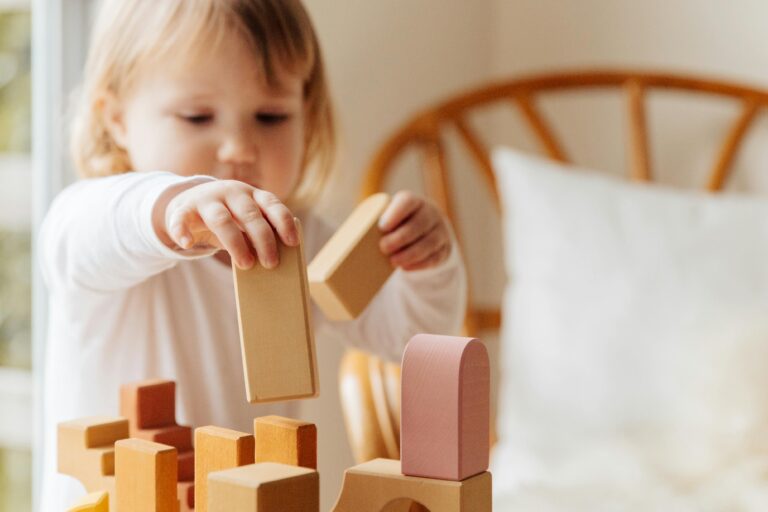
In the Reggio Emilia approach, play is not separate from learning — it is learning. When children build a castle out of blocks, they learn physics (balance, gravity), maths (proportion, symmetry), cooperation (“you hold it and I’ll put it on”) and imagination (“this is a dragon’s castle”). And all of this happens without instructions, textbooks or worksheets. The child sets their own goals, meets difficulties and looks for solutions — and in this way learns the most valuable life skills.
The adult’s role — be present, but don’t dominate
At Accademia dei Piccoli our teachers do not organise every minute of a child’s day. They give space for free play while remaining attentive observers. Their role is to create the conditions — to provide inspiring materials, arrange the space and be available when a child needs support — but not to direct every step.
This requires trust — trust in the child’s ability to choose an activity, solve a problem and find their own way. And this trust usually pays off: children who are given freedom surprise adults with the depth of their ideas, their perseverance and their ability to work with peers. In the Reggio approach the teacher is like a good gardener — they don’t pull the plant upwards to make it grow faster, but take care of the soil, the water and the light.
Outdoor play
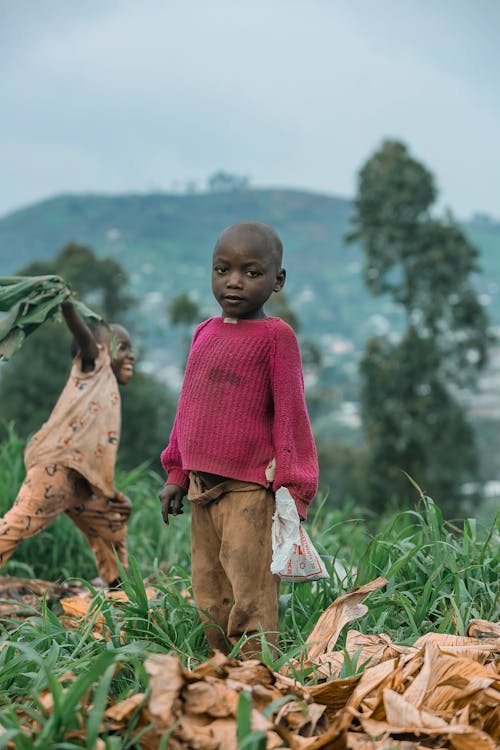
Outdoor play — in the garden, in the park, in nature — is especially valuable. Nature offers an endless variety of sensory stimuli: the texture of bark, the smell of wet grass, birdsong, cool water. Playing outdoors develops coordination, strengthens immunity and — as numerous studies confirm — significantly improves concentration and mood.
Our garden at Accademia dei Piccoli is not a traditional playground with plastic slides. It is a living space with plants, sand, water and stones — a place where children can dig, build, watch insects, collect leaves and simply run freely. Richard Louv, author of “Last Child in the Woods”, warns of “nature-deficit disorder”, in which children cut off from nature lose their curiosity about the world. We do everything we can to prevent this.
What can you do as parents?
The first and most important tip: let your child be bored. Boredom is not the enemy — it is a gateway to creativity. When a child has “nothing to do”, their brain starts looking for solutions, inventing and creating. Boredom gives rise to the most interesting games, the most elaborate block buildings and the longest stories told to teddy bears.
The second tip: limit screen time. A tablet is not a substitute for play — it replaces play with something far poorer. The American Academy of Pediatrics recommends that children under two have no screen time, and older preschoolers no more than an hour a day. This is not conservatism — it is the conclusion of research on the impact of screens on language, attention and creativity.
The third tip: toys don’t need to be expensive or complicated. A box, a blanket, sticks and stones are the best props. A cardboard box can be a ship, a car, a house or a boat — all in one afternoon. A plastic robot can only be a robot.
And finally: play with your children. Don’t direct the play, but be present in it. Sit on the floor, build, draw, pretend. These shared moments are hugely valuable — for your child and for you. Because play is not a break from life. Play is life itself — and perhaps even its most important part.
Sources and further reading
- Ginsburg K.R., “The Importance of Play in Promoting Healthy Child Development and Maintaining Strong Parent-Child Bonds”, Pediatrics, 2007, 119(1), pp. 182–191.
- Yogman M. et al., “The Power of Play: A Pediatric Role in Enhancing Development in Young Children”, Pediatrics, 2018, 142(3), e20182058.
- Gray P., Free to Learn: Why Unleashing the Instinct to Play Will Make Our Children Happier, More Self-Reliant, and Better Students for Life, Basic Books, 2013.

About the author
Katarzyna Jaszczuk
Methodological Director of Accademia dei Piccoli preschool in Kabaty. She is responsible for the Reggio Emilia-based curriculum, pedagogical documentation and supporting teachers in their daily work with children. Meet our team
Read also: Supporting your child’s creativity at home — a practical guide for parents · The environment as the third teacher — how space shapes a child’s development
Would you like to see what this looks like at Accademia dei Piccoli?
You are welcome to visit our preschool in Kabaty (ul. Ekologiczna 4). Book by phone: +48 606 125 126 or by email: kontakt@piccoli.pl. You will find answers to the most common questions in our FAQ.