The parent’s role in the Reggio Emilia approach — partnership instead of delegation
In many models of education, parents act as “clients” — they drop their child off in the morning, pick them up in the afternoon and occasionally receive a progress report. In the Reggio Emilia philosophy it is completely different. Parents are treated as full partners in the educational process — and this principle changes everything.
The educational triangle: child — teacher — parent
The Reggio Emilia approach is based on a deep conviction that the best educational results are achieved when the child, the teacher and the parent form a coherent team. Each brings something different: the child — curiosity, energy and creativity; the teacher — pedagogical knowledge, observation and the ability to create conditions for learning; the parent — intimate knowledge of the child, their history, temperament and needs. None of these elements is more important than the others — only together do they form the full picture.
When these three perspectives meet and complement one another, education becomes more than the sum of its parts. The child feels consistency between home and preschool, which gives them a sense of security and allows them to develop freely. Research in developmental psychology consistently shows that children who experience consistency between their environments do better in terms of emotional and cognitive development.
Dialogue, not reporting
At Accademia dei Piccoli, communication with parents is not limited to parent–teacher meetings or notes in a diary. We focus on ongoing dialogue — conversations at pick-up time, shared reflection on pedagogical documentation and exchanging observations. When a parent tells us that their child has started taking an interest in insects at home, and we see that at preschool they spend hours watching ants, together we can create a project that deepens this fascination.
This dialogue requires openness and trust on both sides. Parents need to trust that the teachers’ approach — even if it looks different from traditional education — serves the child. Teachers need to listen to parents and treat their insights as a valuable source of information. It is a partnership, not a hierarchy. In practice this means that parents are invited to share their observations, and teachers to openly explain their educational decisions.
Documentation as a bridge between preschool and home
One of the most beautiful tools for building this partnership is pedagogical documentation. At our preschool we regularly document children’s learning processes — through photos, quotes from what children say, project descriptions and creative work. This documentation is not a “progress report” in the traditional sense — it does not grade or compare with norms. It is a story about how the child thinks, what moves them and how they develop.
When parents look through this documentation, they often discover sides of their child they did not know — for example: “I didn’t know she could concentrate on one task like that.” Or: “It’s amazing how much he said about our dog — at preschool he says things we never hear at home.” These discoveries deepen the parent–child relationship and strengthen trust in the preschool. Documentation becomes a bridge, connecting the child’s two worlds into one coherent whole.
Involvement, not interference
It is worth stressing that a partnership between parents and preschool does not mean that parents should control every aspect of education or question every pedagogical decision. Involvement means being present, interested and open to conversation. It means reading to your child at home, talking about what they did at preschool and continuing the projects that fascinate them. It also means trusting that the teachers know their job and giving them space to do it.
The preschool community
In Reggio Emilia, the preschool is not an isolated institution — it is part of the community. At Accademia dei Piccoli we greatly value the relationships between families. Joint events, picnics, workshops for parents and celebrating Italian and Polish traditions together all build a sense of community in which children see that adults cooperate, respect one another and create something valuable together.
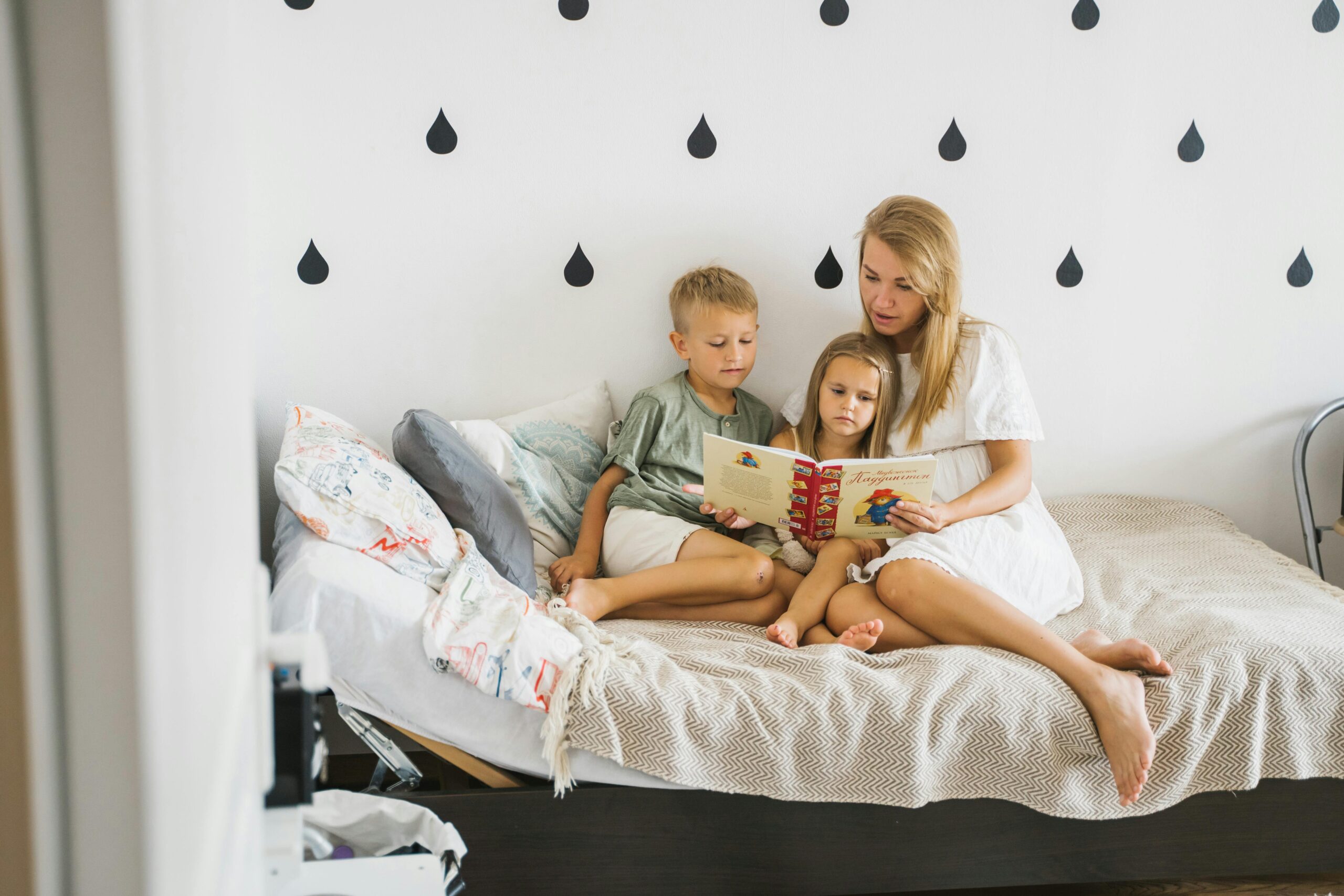
Because in the end, a child’s education does not take place only in preschool classrooms. It happens everywhere — at home, on the way to preschool, at the family table and during bedtime reading. The better home and preschool work together, the richer and fuller that education is.
How can you be a partner?
A few practical tips for parents who want to be active partners in their child’s education: learn more about the Reggio Emilia approach — read, ask questions and talk to the teachers. Continue at home what your child does at preschool — if they are fascinated by insects, go to the park together with a magnifying glass; if they have been painting in the atelier, create a painting corner at home. Share your observations with the teachers — any information about what your child is absorbed in outside preschool is valuable to us.
And this is the heart of the Reggio Emilia approach to parents: you are not spectators — you are co-creators. Your children need you in this process — not as controllers, but as allies. And at Accademia dei Piccoli we are here to support both you and your children — together, as a team.
Sources and further reading
- Edwards C., Gandini L., Forman G. (eds.), The Hundred Languages of Children: The Reggio Emilia Experience in Transformation, 3rd ed., Praeger, 2012.
- Rinaldi C., In Dialogue with Reggio Emilia: Listening, Researching and Learning, Routledge, 2006.
- Epstein J.L. et al., School, Family, and Community Partnerships: Your Handbook for Action, 4th ed., Corwin, 2019.

About the author
Katarzyna Jaszczuk
Methodological Director of Accademia dei Piccoli preschool in Kabaty. She is responsible for the Reggio Emilia-based curriculum, pedagogical documentation and supporting teachers in their daily work with children. Meet our team
Read also: Pedagogical documentation — why we observe and record instead of testing and grading · What is the Reggio Emilia approach and why does it change the way we think about education?
Would you like to see what this looks like at Accademia dei Piccoli?
You are welcome to visit our preschool in Kabaty (ul. Ekologiczna 4). Book by phone: +48 606 125 126 or by email: kontakt@piccoli.pl. You will find answers to the most common questions in our FAQ.